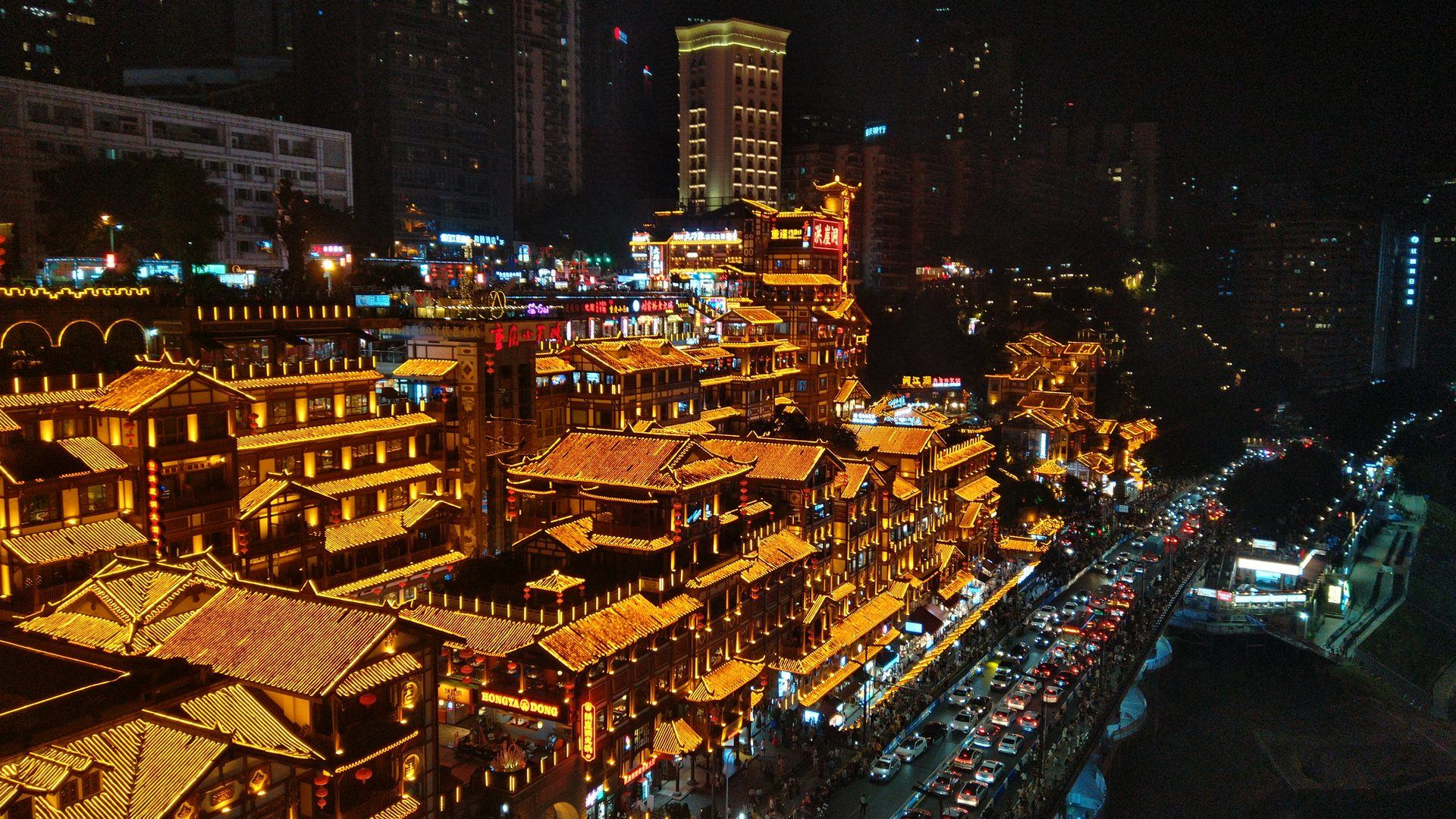
Quick local answer
The best Chongqing night route usually starts before sunset, avoids the busiest Hongya Cave entry points, uses one bridge or riverside angle, and keeps a private vehicle nearby for the exit.
- Start before sunset so you can watch the city change from grey cliffs to neon layers.
- Do not treat Hongya Cave as one entrance; the viewing angle matters more than the address.
- Use a private route if you want to combine Jiefangbei, Hongya Cave, a bridge angle and dinner without wasted steps.
Local planning table
| Stop / issue | Best use | Local note |
|---|---|---|
| Hongya Cave | Gold-lit cliff architecture | After full dark, avoid peak entry pressure |
| Qiansimen Bridge angle | Classic Hongya Cave composition | Crowds build quickly after sunset |
| Nanbin Road | Skyline across the river | Best with vehicle timing |
| Liziba area | Train-through-building scene | Better by day or blue hour |
| Two Rivers cruise | Moving skyline view | Weather and sailing schedule matter |
Local DMC timing note
If guests want Hongya Cave, dinner and a cruise on one night, the order matters. We normally protect the viewing angle first, then move to food or cruise depending on crowd pressure and weather.
Common mistake
Many first-time visitors walk directly into the most crowded Hongya Cave side and spend the best light stuck in pedestrian traffic. A local guide should choose the approach and exit, not just the destination.
Best private route
Hotel pickup, Jiefangbei orientation, early bridge or riverside angle, Hongya Cave after dark, hotpot or lighter dinner, then private transfer back before the late-night bottleneck.
On-the-ground decisions are the difference
Anjia is based in Chongqing, so route choices are not made from a generic China desk. During the trip, the local ground team can respond 24 hours to urgent questions, weather changes, hotel issues and route adjustments.
Want this turned into a private Chongqing route?
Send dates, travellers and your comfort level. We reply within 2 hours, 8:00–20:00 Beijing time, then support urgent in-trip questions 24 hours once you are travelling in Chongqing.
FAQ
Start before sunset and stay through the evening. Arriving early lets you watch the city change from grey cliffs to layered neon, which is the most striking moment. The lights are brightest through the evening and generally dim late at night, so an early-evening start captures the best glow before the biggest crowds build.
The classics are Hongya Cave, the gold-lit stilted cliff complex best seen after full dark, and the Qiansimen bridge angle that frames it. Nanbin Road gives the skyline across the river, the Yangtze Cableway offers a moving view, and a Two Rivers night cruise adds a shifting perspective. A private route links the best angles without wasted steps.
The neon runs year-round and stays vivid through the evening, then generally dims late at night. That means an early-evening visit gives you the fullest glow, while a very late arrival can catch fading lights. We plan your night route to reach the key viewpoints while they are at their brightest, then transfer you back before the late bottleneck.
Do not treat Hongya Cave as a single entrance, because the viewing angle matters more than the address. Many first-time visitors walk straight into the busiest side and lose the best light in pedestrian traffic. A local guide chooses the approach and the exit, arrives after full dark from a calmer angle, and keeps a private vehicle nearby.
Yes, and that is the strongest way to see them. A good first-night route runs hotel pickup, a Jiefangbei orientation, an early bridge or riverside angle, Hongya Cave after dark, then hotpot or a lighter dinner. Doing this by private vehicle protects the best light and gets you back before the late-night bottleneck.
It can be a lovely addition, giving a moving skyline view of the illuminated banks from the water. Weather and the sailing schedule affect it, so it pairs best with a flexible plan. If you want Hongya Cave, dinner and a cruise on one night, the order matters, so we protect the best viewing angle first and adjust the rest around crowds and weather.