Quick answer
The Chongqing Metro is useful for many headline sights, but it is not a simple flat-city subway. Stations can have several exits, steep approaches and long internal walks. For a first visit, use the metro for one clear journey at a time, allow extra time for transfers, and choose the line around your hotel and next stop — not simply the nearest pin on a map.
The most useful visitor connections are Line 2 for Liziba, Line 1 for Ciqikou and Shapingba, Line 3 for Jiangbei Airport Terminal 2 and Chongqing North Railway Station, and Line 10 for Jiangbei Airport Terminal 3 and Chongqing North Railway Station. Check the official Chongqing Rail Transit timetable and route page again on the day of travel, especially for first and last trains or service adjustments.
The visitor routes that matter most
| Destination | Useful rail connection | Planning note |
|---|---|---|
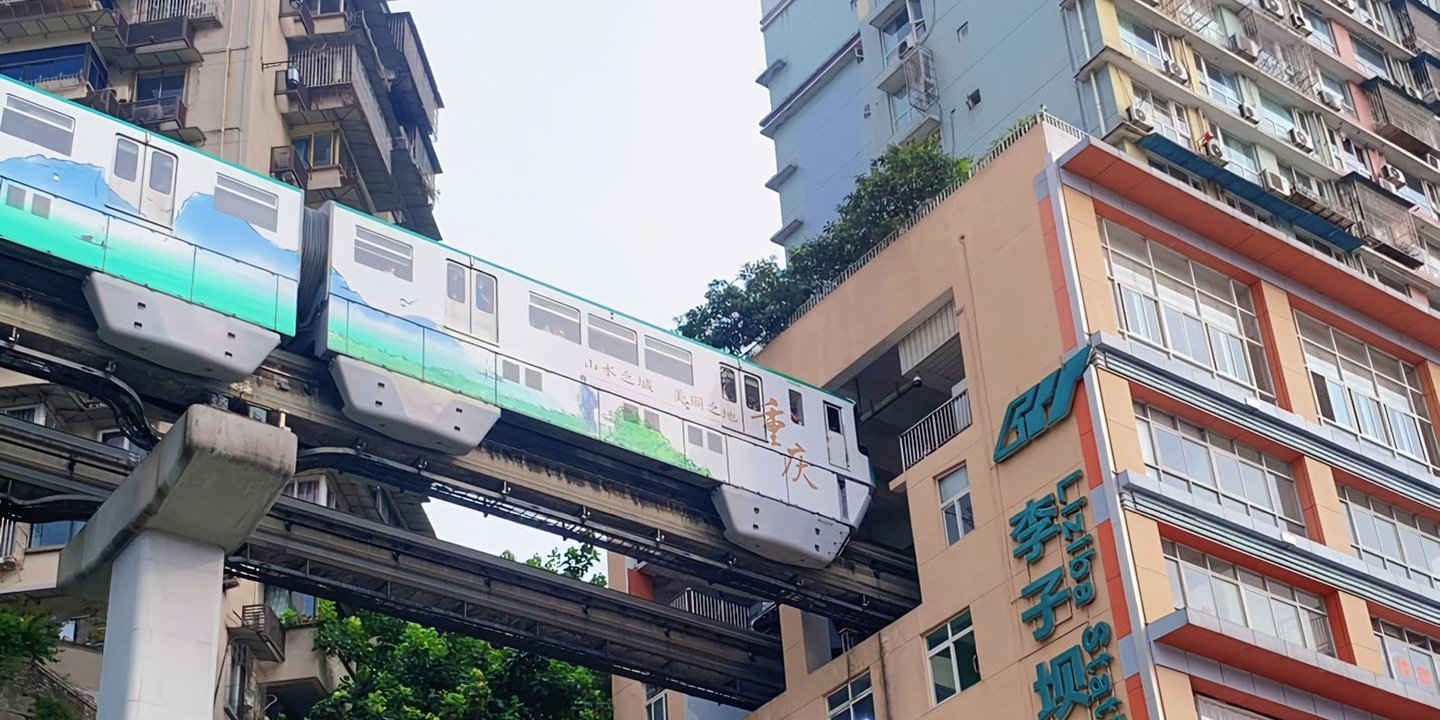
| Liziba Station / train-through-building viewpoint | Line 2 | Liziba is both a metro stop and a sightseeing stop. Allow time for the exit, viewing area and crowds rather than treating it as a quick photo from the train. |
| Ciqikou Ancient Town | Line 1 | Ciqikou is on Line 1. Pair it with other western or central-city plans only when the rest of the day remains realistic. |
| Chongqing North Railway Station | Line 3 or Line 10 | Confirm whether the ticket names North Square or South Square before leaving your hotel. |
| Jiangbei Airport Terminal 2 | Line 3 or Line 10 | Check the terminal on the flight booking; “Jiangbei Airport” alone does not tell you the right line or exit. |
| Jiangbei Airport Terminal 3 | Line 10 | Check the official route and current operating times before an early or late flight. |
Why metro planning in Chongqing feels different
Chongqing is built around rivers, hills, bridges and multiple elevation levels. A station that looks close on a map may still involve a long escalator ride, an elevated-road crossing or a change in height between the entrance and your hotel. The metro is excellent when it removes road traffic from a straightforward point-to-point journey; it is less attractive when you are carrying luggage, arriving after a long flight, travelling with young children or trying to reach a hotel on a hillside.
That is why we do not build a private itinerary around an abstract metro map. We first decide where you are staying, the time you want to visit each sight and whether the day includes luggage or a rail connection. Then we decide whether the metro, a private vehicle or a short combination of both is the calmer choice.
How to plan a metro journey without wasting the day
1. Start with the exact place, not only the attraction name
“Hongya Cave”, “Chongqing North Station” and “Jiangbei Airport” each cover more than one possible approach. Put the hotel name, station terminal and next destination into your plan before leaving. For a rail journey, compare the train ticket’s named station and square with your hotel address; for a flight, confirm the terminal on the airline booking.
2. Give transfers and exits real time
Do not schedule a transfer as though it takes the same time as a simple interchange in a compact city. In Chongqing, a transfer can include a long internal walk and a different street level when you exit. If you have a timed train, dinner reservation or guide meeting, leave a buffer rather than relying on the last possible connection.
3. Keep luggage off complicated sightseeing moves
The metro can be sensible between hotel and airport or railway station when the connection is simple. It is usually not the best first experience after a long-haul arrival, or between several sights with suitcases. Arrange luggage separately, check in first, or use a private transfer when you need a predictable door-to-door connection.
4. Check the live timetable before an early or late trip
First and last trains vary by station, direction and day. Chongqing Rail Transit publishes station-by-station timetable information; use the official timetable rather than a copied blog schedule. This matters most for airport departures, late-night views and any journey that depends on catching the final connection.
Liziba: a metro stop, not the whole day
Liziba is one of Chongqing’s most recognisable metro moments because Line 2 passes through the residential building at the station. It is worth seeing, but it works best as one short stop inside a sensible route rather than as a full itinerary. Pair it with nearby central-city plans only after considering where you are starting and whether you want to be in the city after dark.
For travellers who want the photograph without managing the crowd, elevation changes and route sequence alone, Anjia can place Liziba in a private city day with a driver and guide. The value is not a promise of avoiding every queue; it is a realistic order of sights and a direct ride when the metro is no longer the efficient choice.
Airport and railway-station connections
For airport and rail days, treat the ticket as the authority. The official Chongqing Rail Transit route page lists Line 3 at Jiangbei Airport Terminal 2 and Line 10 at both airport terminals; it also lists Chongqing North Railway Station stops on Lines 3 and 10. Your exact terminal, railway-station square, hotel location and departure time determine which connection is useful.
If you are continuing to Zhangjiajie, do not select a rail service only because its advertised travel time is shortest. First match the Chongqing departure station to your hotel, then allow for hotel checkout, road access, station entry and boarding. See our separate Chongqing to Zhangjiajie by high-speed rail guide for the inter-city rail decision; this page is about moving around Chongqing itself.
When a private vehicle is the better choice
Choose a private vehicle when the day includes airport or station luggage, multiple sights across different elevations, a fixed meeting time, mobility considerations, children, or a late return to the hotel. The metro remains a good way to see Chongqing independently, but it should not become a rule that makes the day harder than it needs to be.
Anjia can combine a short metro experience — including Line 2 and Liziba when it fits — with a private vehicle for the parts of the day where timing and comfort matter. This is route-planning support, not a claim that a guide or car is required for every metro journey.
Use the operator’s live timetable
Network, station and first/last-train information comes from the official Chongqing Rail Transit route and timetable page, checked on 6 August 2026. Before travelling, check it again for service changes. This guide does not promise a fixed fare, payment method, terminal arrangement or transfer duration.
Questions travellers ask
Yes. The official route information lists Line 3 for Jiangbei Airport Terminal 2 and Line 10 for Jiangbei Airport Terminals 2 and 3. Confirm your flight terminal and the current timetable before travelling.
Liziba Station is on Line 2. It is useful for the famous train-through-building view, but visitors should allow time for the exit and viewing area.
Yes. The official route page lists Chongqing North Railway Station connections on Lines 3 and 10. Check the named square on the train ticket and allow extra time for station access.
It is a good option for selected direct journeys. For a full sightseeing day, luggage day or multi-stop route, a mix of metro and private transport is often more comfortable and more predictable.
Want this turned into a private Chongqing plan?
Tell us your dates, group size and preferred pace. We will shape a practical route with the right mix of metro, private vehicle, guides and hotel location.